|
DAVID VOORHIS & ASSOCIATES
Data Research, Regulatory & Petroleum Engineering Consulting
|
|
| |
|
|
| |
< Previous Page >.......Page 8.......< Next Page >
|
|
| |
|
|
| |
IV. Petroleum Engineering Consulting Service
Gas Storage/Deliverability Evaluation -
Finite Difference Simulation Example 1
|
|
| |
|
|
| |
| |
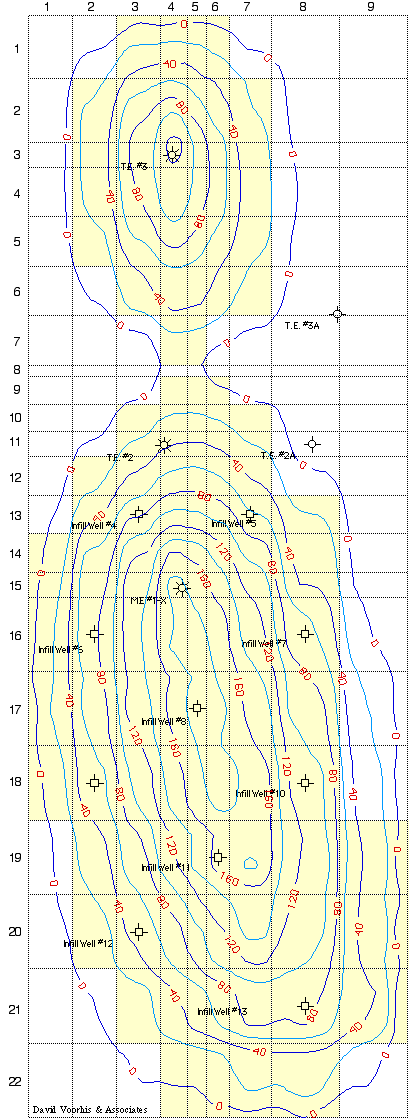
Figure 8.1 is the reservoir grid block representation used to numerically simulate historical and
future performance of a Texas gas field....The grid blocks
colored in yellow represent non-zero porosity grid blocks....The
contours represent the net pay height (in feet) of the gas reservoir....Numerical simulation studies, such as the one performed for this field, are used for creating development
plans that optimize future cash flows to the client....Numerical
simulations for this gas field were used to evaluate the peak gas flowrate deliverability under different operating
scenarios. |
|
|
|
| |
|
|
| |
|
|
| |
Figure 8.1 : Reservoir Grid Block representation
for Numerical Reservoir Simulations of a Texas Gas Field
|
|
| |
|
|
| |
|
|
| |
|
|
| |
|
|
| |
| |
The contour map shown above was created through a history matching process that considered existing
geologic information and the historical production of gas wells in the field....The general shape and pore volume of the reservoir has an influence on gas flow rates of individual wells....So, accurate modeling of individual well flow rates was required....The gas flow rate for individual wells were determined through
the use of the back pressure equation in the numerical reservoir simulator....The equation below is the analytic form of the back pressure equation. |
|
| |
|
|
| |

|
|
| |
|
|
| |
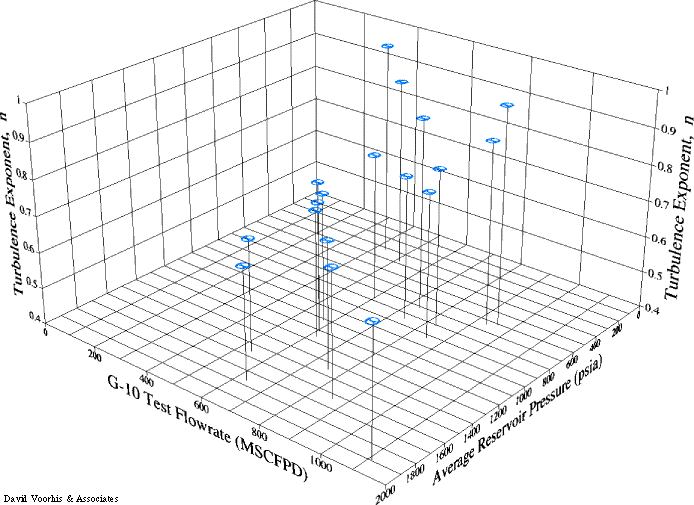
In order to accurately model the individual well flowrates during the history matching process,
historical values of the back pressure equation exponent "n" were required....Historical values for the exponent "n" of the back pressure equation were calculated from annual
G-10 tests required by the Texas Railroad Commission....The
exponent varied with average reservoir pressure and gas flowrate....One of the main reasons the back pressure exponent varied was due to the hydrocarbon liquid content of
the produced gas....The reservoir fluid initially was
a wet gas that became drier (less liquid content) as the field was produced....Figure 8.2 provides an illustration of how the back pressure equation exponent ( referred to as a "Turbulence
Exponent" in the figure ) varied for one of the wells in the gas field. |
|
|
|
| |
|
|
| |
|
|
| |
Figure 8.2 : Back Pressure Equation Exponent Surface
used in Numerical Reservoir Simulations
|
|
| |
|
|
| |
|
|
| |
|
|
| |
|
|
| |
|
|
| |
Click here to view Contact Information.
< Previous Page >.......Page 8.......< Next Page >
|
|
| |
|
|